
|
Last week, I shared how narrowing your focus to just one part of a painting can bring surprising clarity. This week’s tip builds on that idea: document your work. Whether you choose to do it publicly—through social media, like I do—or privately in a sketchbook or journal, writing about your process can reveal things you might completely overlook otherwise. Just yesterday, I was drafting an Instagram caption about the progress of this painting when something clicked. While describing what I’d done so far, I suddenly realized the background steps needed more definition—specifically, additional lines and shadows. That insight didn’t come from staring at the canvas. It came from articulating the process in words.
0 Comments
If you've followed me for a while, you've probably heard me say this before—but I was reminded of it again recently, and it’s worth repeating: when you’re in the final stretch of a painting and something feels off, the best thing you can do is stop looking at the whole thing. That might sound counterintuitive. After all, isn’t the goal to step back and assess the entire piece? Yes… but not yet. Sometimes, you reach a point where the painting looks finished at first glance—but you still have that nagging feeling that it’s not quite there. In those moments, trying to evaluate the whole composition can actually make things harder. It becomes overwhelming, and instead of getting clarity, you end up second-guessing yourself or even making changes you’ll regret. That’s when I find it most helpful to zoom in and focus on one small area. Take my current piece, for example. I found myself stuck, unsure what—if anything—needed to be adjusted. But instead of staring at the entire canvas and spinning my wheels, I zeroed in on one table in the scene. Suddenly, I knew what it needed: a bit more contrast here, a subtle reflection there, maybe a stronger highlight to draw the eye. That shift in focus turned confusion into clarity. Working this way is not only more productive—it’s far less stressful. You stop trying to solve a hundred tiny problems at once and instead give your full attention to one manageable section. And more often than not, improving that one part naturally enhances the whole. To make this process even more streamlined, I think it might help to follow a path—literally. As someone who reads from left to right, that's probably the direction I would choose to move in across the painting when doing my final checks. If you’re from a culture that reads right to left or top to bottom, consider following that instinctive path instead. Your eye already knows how to travel that way, so use it to your advantage. So the next time you’re unsure what your painting needs, try narrowing your focus. The answer might be waiting in just one corner of the canvas. Update: While photographing this painting for the blog, I noticed something I hadn’t seen before—the hair on one of the seated figures looks strangely flat and unfinished. I painted it gray, which was accurate for the scene, but in the context of the colorful, light-filled environment, it doesn't quite sit right. That’s when it hit me: it's not the color that was the problem—it's the lack of depth. Everything else in the painting has light, reflection, and dimension, but the hair doesn't. By zeroing in on just that one element, I'm realizing it needs subtle reflections to carry the same life as the rest of the scene. This is exactly the kind of moment that reinforces why narrowing your focus works. When you give one area your full attention, even something as small as the treatment of hair can suddenly become clear.
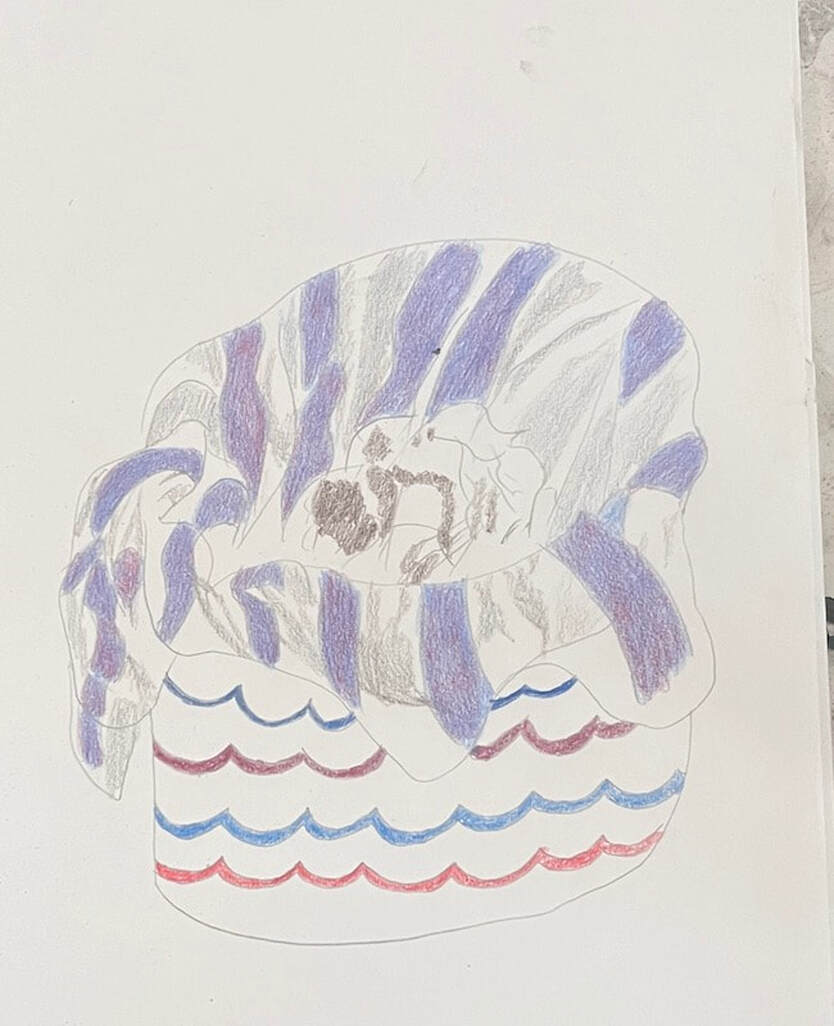
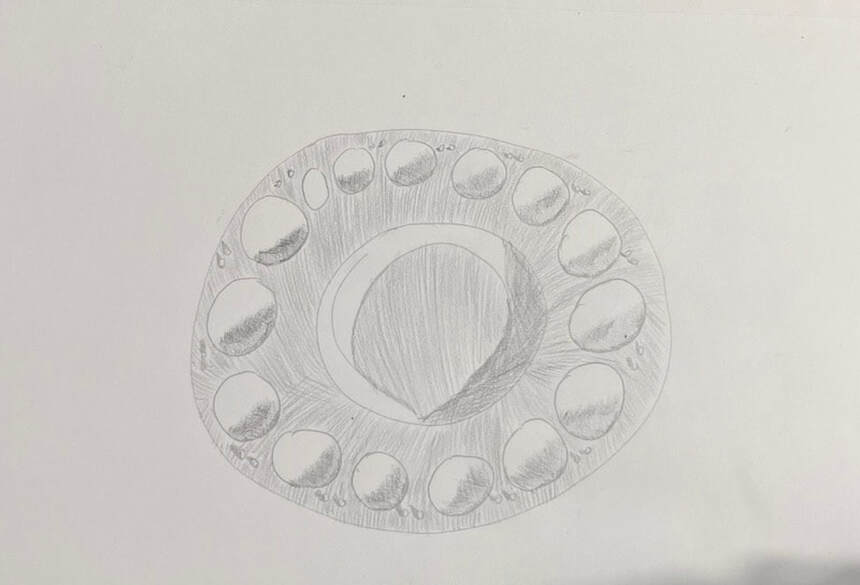
Disclaimer: This article is aimed at people who are professional artists or want to be professional artists. Sometimes, I have times when I don’t feel like doing art. Yesterday was one of those days. Today might be one, too. So what do I do when I have those days? Do I say, “Oh, I don’t feel like doing art, so I won’t do it”? Nope. That’s not what I do. I’ll sit down with my sketchbook and draw whatever in my vicinity happens to catch my eye. Yesterday, it was my trash can. A few days ago, it was a paint palette. I don’t put pressure on myself to make a masterpiece. The only important thing is that I create something. Here’s the thing, though. I can sit down, not wanting to draw, and ten minutes later, I do not want to stop because I’m focused on the lines and shadows I want to depict. Using the hatching technique to draw the shadows, especially the arc-shaped ones, in the palette's wells was a lot of fun. Sometimes, if I have a project and I’m not feeling motivated to work on it, I’ll find one thing I can do, even if it’s just painting a shadow somewhere, and once I’ve done that, I’ll notice something else I can do on it, and so on. I could sit down thinking I'm only going to paint for ten minutes and be at the easel for an hour. I know the title of this article was harsh, but I hope you found it encouraging. If you stumbled across it in a google search, consider subscribing to my newsletter to read more.
|
Sara MillettPainter of portraits and wildlife Archives
November 2025
Categories
All
|
